

Material Matters Copenhagen 2026
Where Material Innovation Meets Design Excellence
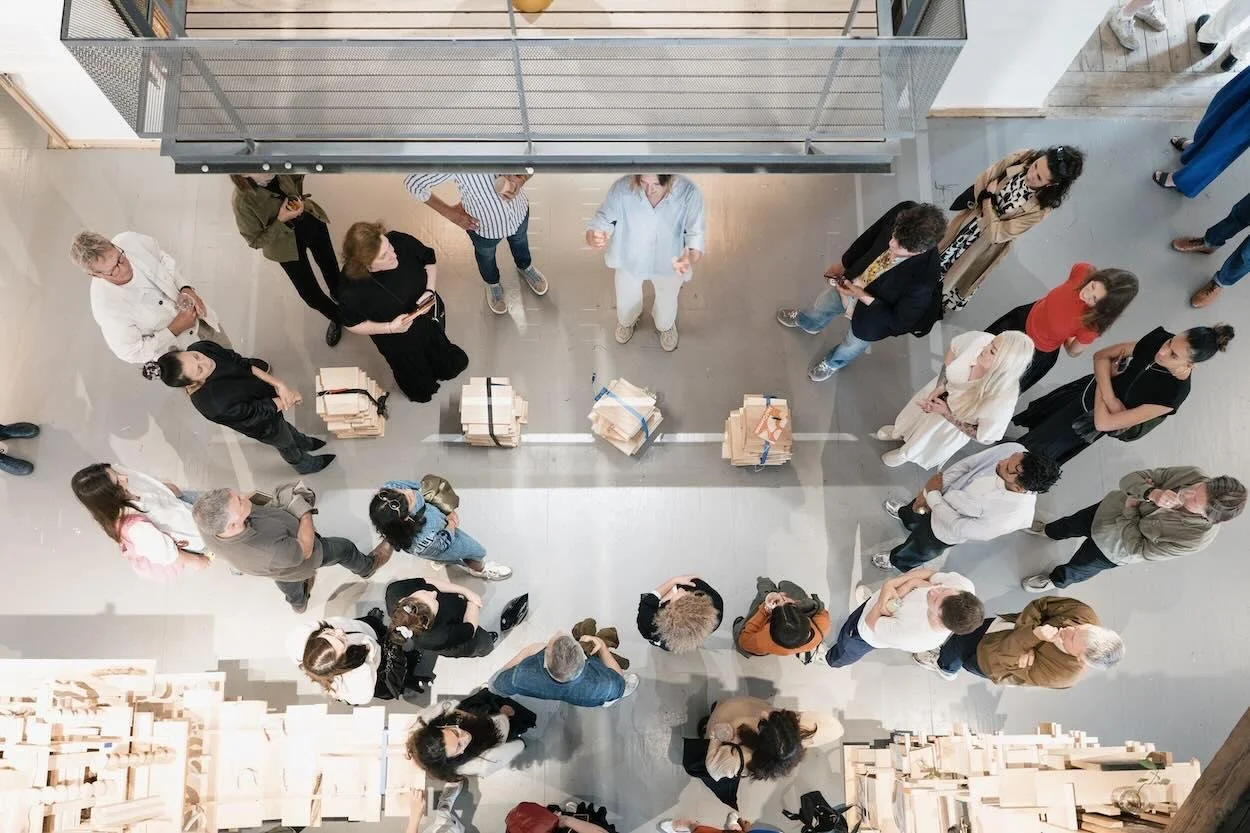
Material Matters Copenhagen 2026, part of the wider 3daysofdesign programme, continues to position itself as one of the platforms for material-driven design research. Hosted in the historic Gammel Dok building in Christianshavn, the exhibition brings together designers, manufacturers, researchers, and makers exploring how materials are reshaping the future of design practice.
Rather than functioning as a conventional trade show, Material Matters operates as a research-led environment where material innovation, storytelling, and production systems are treated as interconnected forces. What stands out this year is: Materials are active agents in shaping aesthetics, meaning, and circular systems, not only passive building blocks.
A new generation of material-led design
This year brings together nineteen international exhibitors working across a wide spectrum of material experiments, including mycelium, bacterial cellulose, reclaimed wood, recycled paper, rice husks, glass, and concrete derivatives. Despite the diversity of media, a shared intent runs through the exhibition: rethinking value through material transformation.
There is a strong focus on local sourcing, regenerative systems, and cross-disciplinary collaboration. Material development is increasingly tied to questions of geography, waste streams, and cultural context, rather than purely formal innovation.
MP selected three projects that stand out for their clarity of vision and their contribution to the broader conversation around circular design systems.
Aifunghi: designing with mycelium intelligence
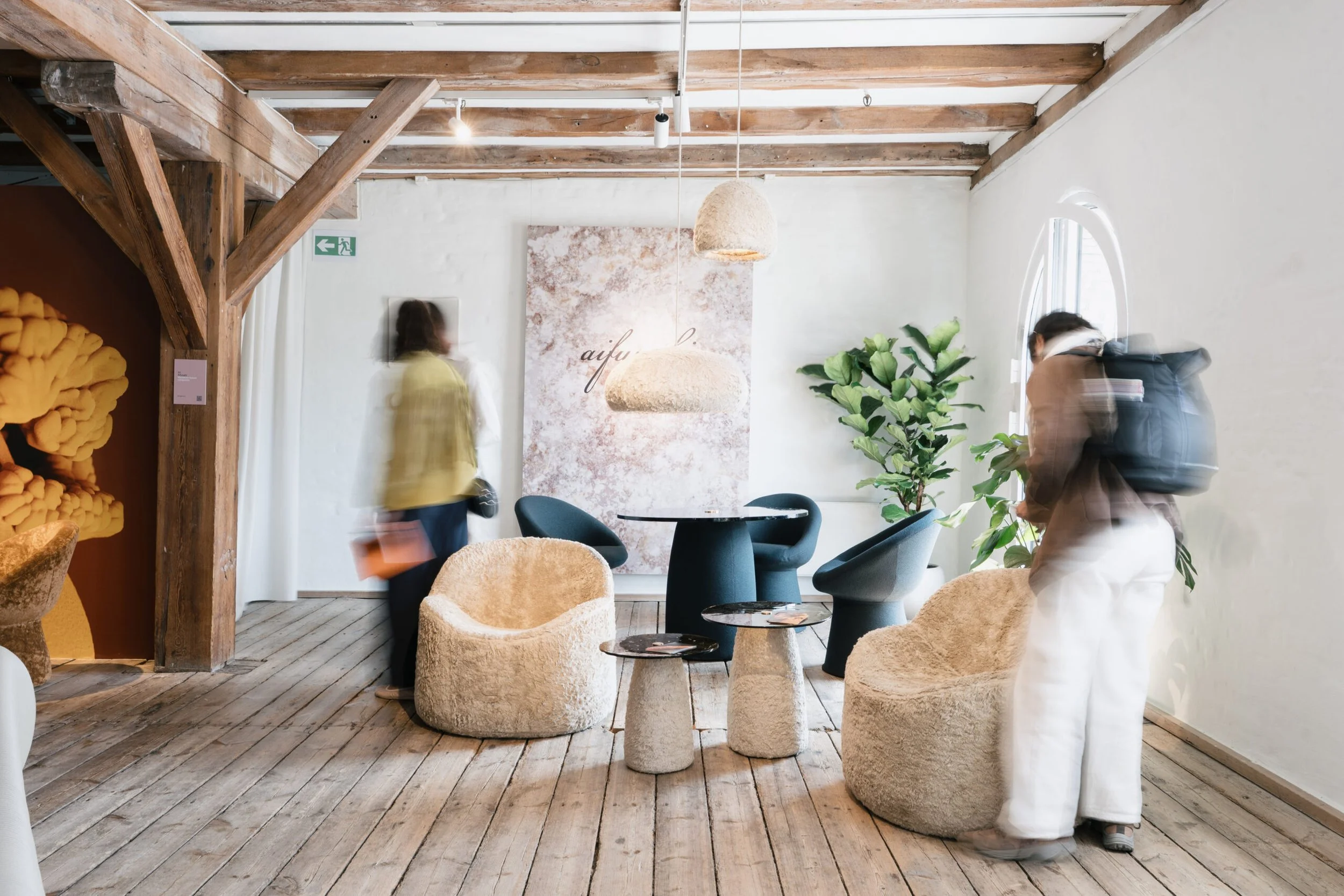
Aifunghi, founded by Marije and Bart Schilder, continues to develop a distinctive approach to mycelium-based design. Working with mycelium composites, the studio creates furniture and lighting pieces that sit at the intersection of biological growth and refined craftsmanship.
Their recent work moves beyond experimentation into a more defined design language. The material is not treated as a novelty or technical proof of concept, but as something that can hold atmosphere, tactility, and emotional presence.
What distinguishes Aifunghi’s practice is the balance between material innovation and aesthetic resolution. The mycelium is not hidden behind form making. Instead, it becomes the form itself, shaping both structure and narrative in equal measure.
BIRDMIND: transforming agricultural residue into architectural material
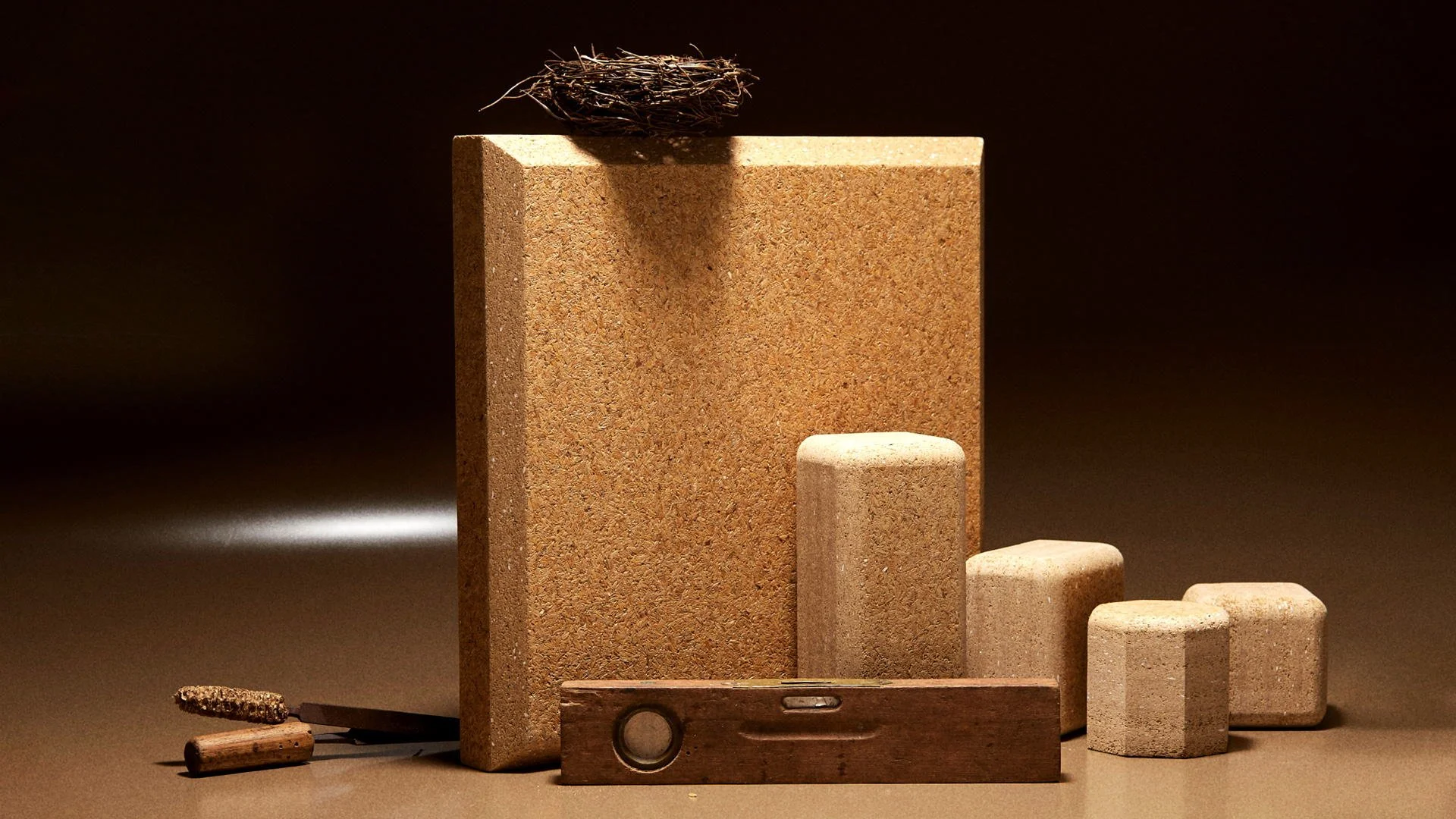
BIRDMIND explores the potential of overlooked agricultural by-products, developing interior and architectural materials from rice husks and integrating discarded mussel shells into surface systems.
Their work highlights a growing design direction focused on secondary material streams, where waste is rethought as a valuable resource with both structural and aesthetic potential. Rather than importing generic recycled content, BIRDMIND’s approach often begins with regional specificity, grounding material development in place-based systems.
This results in materials that feel rooted in their origin, shaped by local agriculture and industry, while still fitting the needs of contemporary interiors.
Pit to Table: circular systems between design and food culture
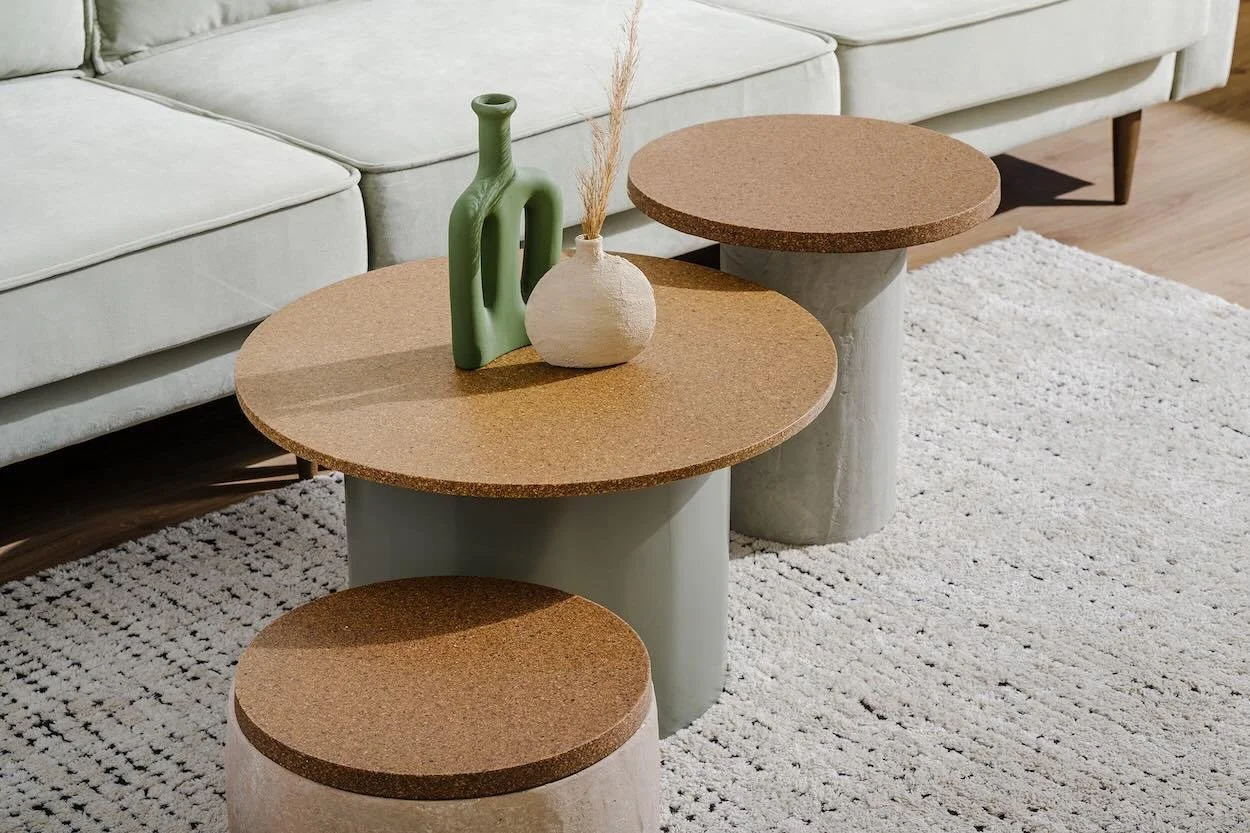
Pit to Table presents a multidisciplinary exploration of circularity across material production and food systems. Developed through collaboration between designers, architects, and a chef, the project focuses on olive industry by-products, particularly olive pits, as a primary material resource.
These residues are reprocessed and integrated into spatial and object-based elements within the installation, creating a direct link between agricultural waste and built environment.
Pit to Table is not a single-design outcome. It works more as an open system, connecting material research, spatial design, and culinary practice into one shared framework. It shows how circular thinking can move across disciplines, not stay within one field.
Closing perspective
Taken together, these projects reflect a broader shift within material-led design practice. Innovation is no longer only about creating new materials, but about reworking existing systems, waste streams, and biological processes through design.
With appreciation to Grant Gibson and William Knight, Material Matters continues to be a platform that brings material-led thinking into focus within contemporary design discourse.
